


Renewable Energy and Sustainable Communities
It is no secret that urbanization has experienced dramatic growth in the last 20 years, with more than half of the world’s population living today in urban areas. Due to the transformation driven by urban populations, countries are experiencing a rapid transition from rural to urban economies, with 80 % of the population living in developing counties and accounting for 2/3 of the world’s greenhouse gas emissions. Given population will increase furthermore and cities will arise in the following decades, it is important not only to transition from fossil to renewable sources but to emphasize sustainable and flexible building and community models that can generate their own power and provide better living experiences.
Renewable energy can make us more resilient to climate and geopolitical impacts with design being the pathway into people’s every life. This can be achieved by introducing PV panels, wind turbines, and geothermal systems; orienting and optimizing buildings for solar exposure, electrifying building systems including those for heating, cooling, and ventilation; and storing and managing energy on-site through batteries and energy-management systems. The question from an architectural and design point of view however is, how to integrate such alternatives esthetically, emotionally, and functionally into our communities without being seen as just utilitarian technologies.
Energy positive residential communities
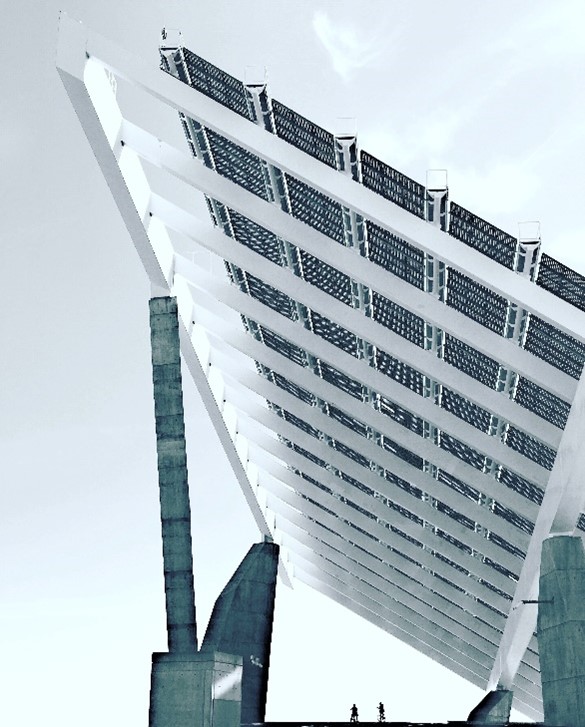
Photo by David Cristian on Unsplash
We need to think about energy solutions for the urban future with homes and neighborhoods designed to meet their own energy needs. Positive energy urban neighborhoods generate an annual surplus of renewable energies and net-zero greenhouse gas emissions by using energy very efficiently, producing their own energy, offering flexible systems for usage and storage, and dynamically integrating it into the regional energy systems.
However, this is only the first step. For community net-zero energy, buildings need to be fully electrified removing the use of coal, oil, and gas; integrate low energy appliances, insulation, and energy-efficient windows. Additionally, passive housing techniques should be used to achieve deep energy savings from heating, cooling, and ventilation.
It’s all about incorporating innovative energy efficiency strategies – combining wind, solar and geothermal energy sources – from the conception of the planning process and introduce it into our daily patterns without sacrificing design quality or adding costs for the developers or community members.

Photo by ASIA CULTURECENTER on Unsplash
Alternatives for sustainable energy districts
There are many alternatives for sustainable energy districts, from a mixture of passive and active strategies to energy-efficient district heating systems.
As for residential complexes, optimizing the configuration of apartment buildings and open spaces for rooftop solar power generation and building energy efficiency it’s the first step. Additionally, buildings should be designed with the seasonal path of the sun in mind, maximizing solar heat in the winter and reducing it in summer.

Photo by aboodi vesakaran on Unsplash
Community-wide energy can be reduced by designing streets and open spaces to maximize afternoon breezes and planting trees for shading and cooling. Urban areas could generate and store their energy creating decentralized energy source that supports grid resilience and stability. At the same time, the trading of energy generated onsite is possible by selling stored energy to the grid when demand is high and storing excess power when public demand is low.
Shared spaces and infrastructure also play an important role. Public spaces have a great potential to incorporate geothermal heating and cooling as it is invisible to the everyday eye. Additionally, with the current tax incentives and grant programs available in Germany, its use is growing faster as its more efficient and requires less equipment to run.
Introducing solar paving in pedestrian areas, PV panels integrated into the main structures of facades or light posts and inserting electrical cables into steel pipes that could be used as urban furniture can make a big difference into making renewable energy part of our every life and not an add-on. Energy collectors’ spaces such as solar farms can and should be accessible to the public and utilized as public areas being sculptural and beautiful pieces of design.

Photo by Kévin JINER on Unsplash
A rethink in planning is required
Intelligent design also advances renewable energies in urban spaces - this is the great challenge and responsibility facing architects, urban and landscape planners today. In order to optimally exploit the potential of renewable energies on site in each case, close cooperation with energy planners in terms of source exploitation is necessary and absolutely sensible. In this context, it is also important to promote a change of thinking in the planning process: After all, the feasibility or preliminary studies for source planning should already take place before the actual architectural building planning - in the performance phase 0, so to speak. Only then is it guaranteed that potentials and requirements for the district can be identified at an early stage and these can then be met in terms of planning.